
SEO: The Complete Guide to Search Engine Optimization, Strategies, Tools & Services
Search Engine Optimization, commonly known as SEO, is one of the most important components of digital marketing. Whether you run a local business, e-commerce store, service company, personal brand, or content website, SEO can help your pages become more visible when people search for products, services, answers, or information on search engines such as Google.
But SEO is much more than adding keywords to a website.
Modern SEO involves understanding how search engines discover, crawl, index, and rank content; creating useful information for users; improving website performance and technical accessibility; building authority; optimizing for local searches; and continuously measuring and improving results.
This complete guide explains what SEO is, how SEO works, different types of SEO, important SEO strategies, SEO tools, SEO in digital marketing, SEO services, and how businesses can use SEO to build long-term organic visibility.
What Is SEO?

SEO stands for Search Engine Optimization.
SEO is the process of improving a website and its content so that search engines can better understand it and users can more easily discover and use it through organic search results.
When someone searches for something on Google, the search engine evaluates many signals to determine which pages are most relevant and useful for that particular query.
SEO helps businesses improve their chances of appearing for relevant searches.
For example, a person searching for:
- “digital marketing agency in Nagpur”
- “SEO services in Nagpur”
- “best orthopedic hospital in Nagpur”
- “how to improve website ranking”
- “SEO tools for keyword research”
may see different websites in the search results depending on relevance, quality, location, authority, search intent, and many other factors.
The goal of SEO isn’t simply to rank for as many keywords as possible. The goal is to attract the right people with the right search intent and provide them with a useful experience.
What Is the Full Form of SEO?
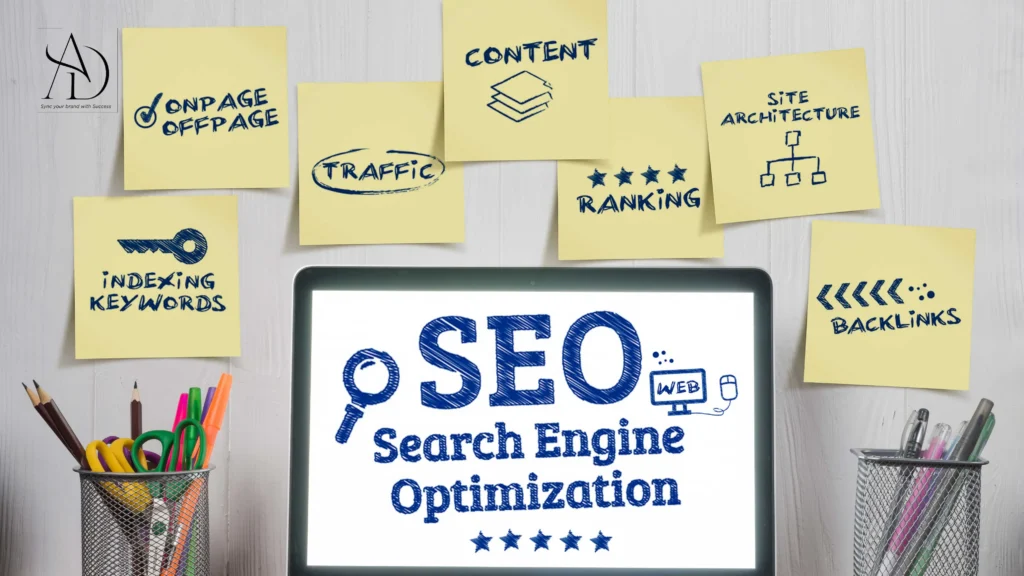
The full form of SEO is Search Engine Optimization.
The three words explain the concept:
Search Engine: Platforms such as Google that help users find information online.
Optimization: Improving a website and its content so that search engines and users can understand and use it more effectively.
SEO focuses primarily on organic search visibility, meaning traffic that comes from unpaid search results.
How Does SEO Work?
Search engines use automated systems to discover and understand web pages.
A simplified SEO process looks like this:
Crawling → Indexing → Understanding → Ranking → Search Results
1. Crawling
Search engine crawlers discover web pages by following links and accessing publicly available content.
2. Indexing
After discovering a page, a search engine can analyze and store information about that page in its index.
Not every page that exists on the internet will necessarily be indexed.
3. Understanding
Search engines analyze the content, structure, context, links, images, and other signals on a page to understand what it is about.
Modern search systems can understand concepts and relationships between words, meaning websites don’t need to rely on exact keyword repetition to communicate relevance.
4. Ranking
When a user enters a search query, search engines evaluate relevant pages and determine which results are most appropriate for the query.
5. Serving Results
The search engine presents the results to the user, sometimes including traditional organic listings as well as features such as images, videos, maps, featured snippets, and other search features.
This is why successful SEO requires much more than inserting a keyword into an article.
Why Is SEO Important for Businesses?
A strong SEO strategy can help a business build visibility without paying for every individual organic visit.
Some important benefits include:
Increased Organic Visibility
SEO can help your website appear when potential customers search for topics, products, or services related to your business.
More Relevant Website Traffic
Ranking for relevant searches can bring visitors who are already looking for information or solutions related to what you offer.
Long-Term Marketing Value
Unlike advertising campaigns that generally stop generating traffic when spending stops, well-optimized content can continue attracting organic visitors over time.
However, SEO isn’t completely passive. Rankings and search behavior change, so websites need ongoing optimization.
Improved Brand Awareness
Repeated visibility in search results can help people become familiar with your business.
Better User Experience
Many SEO improvements also benefit users. Faster pages, clear navigation, descriptive headings, mobile-friendly layouts, and useful content make websites easier to use.
What Are the Different Types of SEO?
SEO is commonly divided into several major areas.
1. On-Page SEO
On-page SEO focuses on elements that exist on your website and individual pages.
It can include:
- Page titles
- Headings
- Content quality
- Keyword and topic relevance
- Internal links
- URLs
- Image optimization
- Meta descriptions
- Search intent
- Structured content
The objective is to make pages useful, understandable, and relevant to both users and search engines.
2. Technical SEO
Technical SEO focuses on the technical aspects that influence how search engines access, crawl, understand, and index your website.
Important areas include:
- Website architecture
- Crawlability
- Indexability
- XML sitemaps
- Canonical URLs
- Redirects
- HTTPS
- Mobile usability
- Page performance
- Structured data
- JavaScript rendering
- Duplicate content management
Technical SEO is particularly important when a website is large or has technical problems preventing important pages from being properly discovered or indexed.
3. Off-Page SEO
Off-page SEO refers to activities outside your own website that can contribute to your website’s reputation and visibility.
One important component is earning links from other relevant websites.
Other activities can include:
- Digital PR
- Brand mentions
- Industry publications
- Relevant business listings
- Community participation
- Content promotion
The focus should be on building genuine authority rather than manipulating search rankings through artificial link schemes.
4. Local SEO
Local SEO helps businesses become more visible for searches associated with a particular geographic area.
For example:
“SEO agency near me”
“digital marketing agency in Nagpur”
“orthopedic hospital in Nagpur”
Local SEO can involve:
- Google Business Profile optimization
- Consistent business information
- Local landing pages
- Local content
- Reviews
- Relevant citations
- Local links
- Location-specific keyword research
For businesses serving a specific city or region, local SEO can be particularly valuable.
5. E-Commerce SEO
E-commerce SEO focuses on improving the organic visibility of online stores and product pages.
It can include:
- Product page optimization
- Category page optimization
- Product descriptions
- Internal linking
- Product structured data
- Faceted navigation management
- Technical SEO
- Image optimization
- Informational content
What Is an SEO Strategy?
An SEO strategy is a structured plan for improving a website’s organic search visibility.
A successful strategy normally starts with understanding the business and its audience rather than immediately creating content.
A basic SEO strategy can include:
Business Goals → Audience Research → Keyword Research → Search Intent → Content → Technical SEO → Authority → Measurement → Optimization
Step 1: Understand the Business
Identify:
- Products or services
- Target customers
- Geographic markets
- Business objectives
- Competitors
- Conversion goals
Step 2: Conduct Keyword Research
Keyword research helps identify what potential customers search for.
Instead of focusing only on search volume, consider:
- Search intent
- Relevance
- Competition
- Commercial value
- Location
- Customer journey
For example, someone searching “what is SEO” has a different intent from someone searching “SEO services in Nagpur.”
The first query is primarily informational.
The second has stronger commercial intent.
Step 3: Map Keywords to Pages
Avoid creating multiple pages that compete for exactly the same search intent.
Instead, assign major topics and keyword groups to appropriate pages.
For example:
SEO → Comprehensive SEO guide
SEO services → SEO services landing page
Local SEO → Local SEO service or guide
SEO tools → SEO tools guide
This creates a clearer website structure.
Step 4: Create Helpful Content
Content should answer the user’s question better than simply repeating keywords.
Useful content can include:
- Guides
- Tutorials
- Comparisons
- Case studies
- FAQs
- Industry insights
- Original research
- Service explanations
Step 5: Optimize Technical SEO
Make sure important pages can be crawled and indexed and that your website provides a good experience for visitors.
Step 6: Build Authority
Promote useful content and earn relevant mentions and links naturally.
Step 7: Measure Results
Track:
- Organic clicks
- Impressions
- Search positions
- Organic conversions
- Indexed pages
- Engagement
- Leads
- Revenue
Then use the data to improve your strategy.
What Are SEO Tools?
SEO tools are software platforms that help marketers and website owners research, analyze, monitor, and improve organic search performance.
Different tools serve different purposes.
Keyword Research Tools
These tools can help identify:
- Search queries
- Search volume
- Keyword variations
- Competition
- Search intent
- Related topics
Website Audit Tools
Technical SEO tools can identify issues involving:
- Broken links
- Redirects
- Missing metadata
- Duplicate pages
- Crawlability
- Indexability
- Technical errors
Search Performance Tools
Search performance platforms can help website owners understand:
- Which queries generate impressions
- Which pages receive clicks
- Average search positions
- Click-through rates
- Indexing issues
Backlink Analysis Tools
These tools can help analyze a website’s link profile and discover relevant opportunities.
Competitor Research Tools
Competitor analysis can reveal:
- Keywords competitors rank for
- Content gaps
- Backlink opportunities
- Organic traffic patterns
- Topics worth covering
SEO tools should support decision-making, not replace strategy.
How Does SEO Fit Into Digital Marketing?
SEO in digital marketing refers to using organic search visibility as part of a broader digital marketing strategy.
SEO can work alongside:
- Social media marketing
- Google Ads
- Meta Ads
- Content marketing
- Email marketing
- Influencer marketing
- Online reputation management
- Conversion rate optimization
For example, paid advertising can generate immediate visibility, while SEO can build organic visibility over a longer period.
A business may therefore use both paid and organic strategies depending on its goals.
SEO vs Google Ads: What’s the Difference?
SEO and Google Ads can both help businesses appear in search results, but they work differently.
| SEO | Google Ads |
|---|---|
| Organic visibility | Paid visibility |
| Long-term strategy | Campaign-based |
| No payment for every organic click | Advertiser pays according to campaign setup |
| Results can take time | Can generate visibility quickly |
| Builds organic search presence | Useful for immediate promotion |
| Requires ongoing optimization | Requires ongoing budget |
The best choice depends on the business, competition, goals, budget, and customer journey.
In many cases, using both can create a stronger search marketing strategy.
What Are SEO Services?
SEO services are professional services designed to improve a website’s organic search visibility and performance.
An SEO service provider or agency may offer:
- SEO audits
- Keyword research
- On-page SEO
- Technical SEO
- Local SEO
- Content strategy
- Content optimization
- Internal linking
- Competitor analysis
- Link-building strategies
- Google Business Profile optimization
- SEO reporting
- Performance monitoring
The exact services vary depending on the agency and the business’s requirements.
Why Should Businesses Invest in SEO Services?
SEO can become complicated when a website has technical issues, hundreds of pages, multiple locations, strong competition, or limited internal expertise.
Professional SEO services can help businesses develop a structured process for:
Research → Strategy → Implementation → Monitoring → Improvement
A good SEO provider should also connect SEO activity with actual business objectives instead of focusing only on rankings.
For example, ranking improvements are useful, but generating qualified leads, enquiries, sales, or other meaningful business outcomes is often more important.
How Long Does SEO Take to Show Results?
There is no universal timeline for SEO.
Some changes may become visible relatively quickly, while competitive keywords and new websites can require considerably more time.
Results can depend on:
- Website age
- Existing authority
- Competition
- Technical health
- Content quality
- Search demand
- Industry
- Location
- Website size
- SEO implementation
- Search engine changes
SEO should therefore be treated as an ongoing process rather than a one-time project.
What Are Common SEO Mistakes?
Some common SEO mistakes include:
Keyword Stuffing
Repeating keywords unnaturally can make content difficult to read and may violate search engine spam policies.
Creating Content Only for Search Engines
Content should primarily provide value to people rather than being written simply to manipulate rankings.
Ignoring Search Intent
A page may contain the right keywords but still perform poorly if it doesn’t satisfy what users actually want.
Publishing Duplicate Content
Multiple pages targeting the same intent can create confusion and make it harder for search engines to determine which page should rank.
Ignoring Technical SEO
Excellent content cannot reach its full potential if important pages cannot be properly crawled or indexed.
Buying Low-Quality Links
Manipulative link-building practices can create risks rather than sustainable authority.
Focusing Only on Rankings
Rankings are useful metrics, but businesses should also monitor organic traffic, leads, conversions, and revenue.
What Are the Most Important SEO Trends?
SEO continues to evolve as search engines become better at understanding content and user intent.
Important areas to watch include:
Search Intent
Understanding what users actually want from a query is increasingly important.
Helpful, People-First Content
Content should provide genuine value rather than simply targeting keywords.
AI and Search
AI is changing how people discover and consume information online. Businesses need to focus on original expertise, useful content, strong brand presence, and information that genuinely helps users.
Local Search
For location-based businesses, maintaining accurate business information and providing useful local content remains important.
User Experience
Website usability, mobile experience, performance, accessibility, and clear navigation all contribute to a better experience.
Brand Authority
Building a recognizable and trusted brand can support visibility across search and other digital channels.
How Can You Measure SEO Success?
SEO performance should be measured using multiple metrics.
Organic Clicks
Shows how many users visit your website through organic search.
Impressions
Shows how frequently your website appears in search results.
Search Position
Provides an indication of where your pages appear for tracked queries.
Click-Through Rate
CTR helps evaluate how frequently users click your search result after seeing it.
Organic Conversions
This is one of the most important business metrics.
Conversions can include:
- Form submissions
- Phone calls
- Purchases
- Enquiries
- Bookings
- Sign-ups
Revenue
For businesses selling online, connecting organic traffic with revenue provides a stronger picture of SEO’s commercial value.
Is SEO Still Important?
Yes. Search remains an important way for people to discover businesses, products, services, and information.
However, SEO has changed significantly.
Successful SEO today isn’t simply about finding a keyword and repeating it throughout a page.
It involves creating a technically accessible website, understanding search intent, publishing useful content, developing authority, improving user experience, and continuously analyzing performance.
Businesses that treat SEO as a long-term digital marketing asset can build a stronger organic presence over time.
Frequently Asked Questions About SEO
What does SEO stand for?
SEO stands for Search Engine Optimization.
What is SEO in digital marketing?
SEO in digital marketing is the practice of improving a website’s organic visibility on search engines to attract relevant visitors and support business goals.
What are SEO tools?
SEO tools are software platforms used for activities such as keyword research, technical audits, competitor analysis, backlink analysis, rank tracking, and search performance monitoring.
What are SEO services?
SEO services are professional services that help businesses improve their organic search visibility through activities such as technical SEO, on-page optimization, content strategy, local SEO, keyword research, and performance monitoring.
Is SEO free?
Organic search traffic does not require paying a search engine for every click, but effective SEO usually requires investment in strategy, content, technical improvements, tools, and expertise.
How long does SEO take?
SEO results vary depending on competition, website authority, technical health, content quality, industry, and implementation. Some improvements can appear relatively quickly, while competitive rankings may take considerably longer.
Is SEO better than paid advertising?
Neither is universally better. SEO can support long-term organic visibility, while paid advertising can provide faster visibility. Many businesses benefit from combining both approaches.
Final Thoughts
SEO is no longer just a technical marketing tactic. It is a combination of content, technology, user experience, authority, research, and digital marketing strategy.
From understanding the basics of Search Engine Optimization to using SEO tools, implementing technical improvements, creating useful content, optimizing for local searches, and investing in professional SEO services, every part of the process contributes to a stronger search presence.
The most effective approach is to focus less on trying to “trick” search engines and more on creating a website that is useful to people, easy for search engines to understand, technically accessible, and aligned with genuine search intent.
SEO takes time, consistency, analysis, and continuous improvement. But when approached strategically, it can become one of the most valuable long-term channels for building online visibility and attracting potential customers. Best Marketing Agency Nagpur